
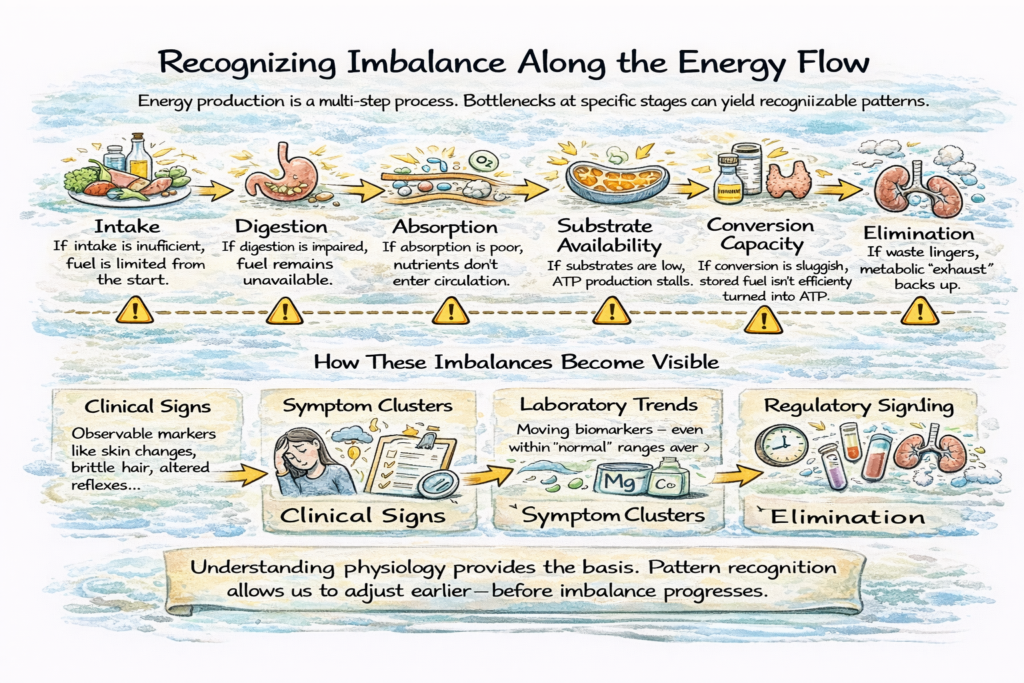
IX. Recognizing imbalance Along the energy flow
Recognizing Imbalance Along the Energy Flow Because energy production is a multi-step process, imbalance can arise at specific stages. When […]
These posts explore a foundational principle: energy drives physiological function.
Building on basic anatomy and physiology, this category looks at how energy is produced, distributed, regulated, and balanced within the body. It examines how cellular energy supports organ systems, how supply and demand must remain aligned, and how early imbalances may appear before overt dysfunction develops.
The goal is not to provide diagnosis, but to offer a clear conceptual lens — a way to understand how energy flow influences function, adaptation, and resilience.
This perspective forms the foundation of the bioenergetic approach used in clinical practice, where energy patterns are always interpreted in the context of the individual.
Recognizing Imbalance Along the Energy Flow Because energy production is a multi-step process, imbalance can arise at specific stages. When […]
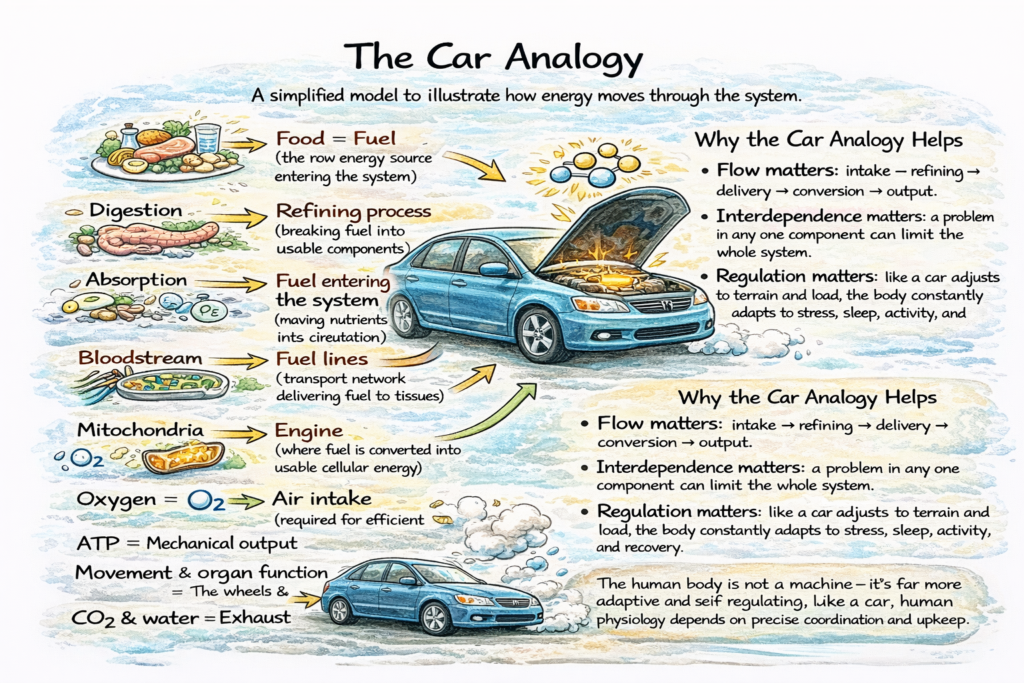
The Car Analogy Human physiology is complex, with multiple systems interacting continuously. To make the overall flow easier to visualize,
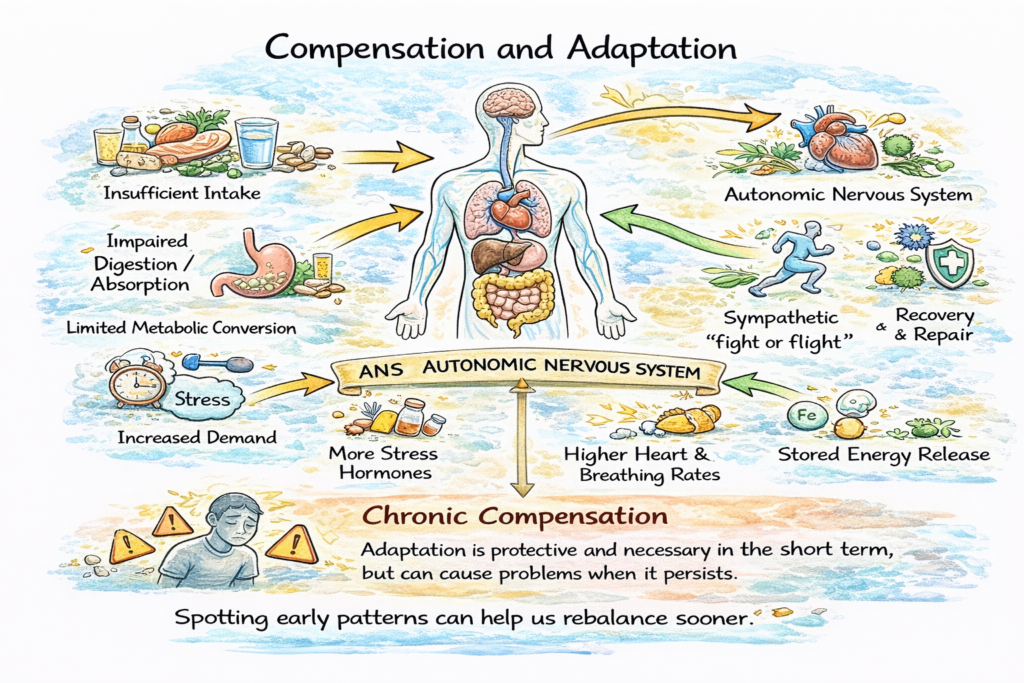
Compensation and Adaptation The human body is highly adaptive. When effective energy availability drops—or when total demand rises—the body automatically
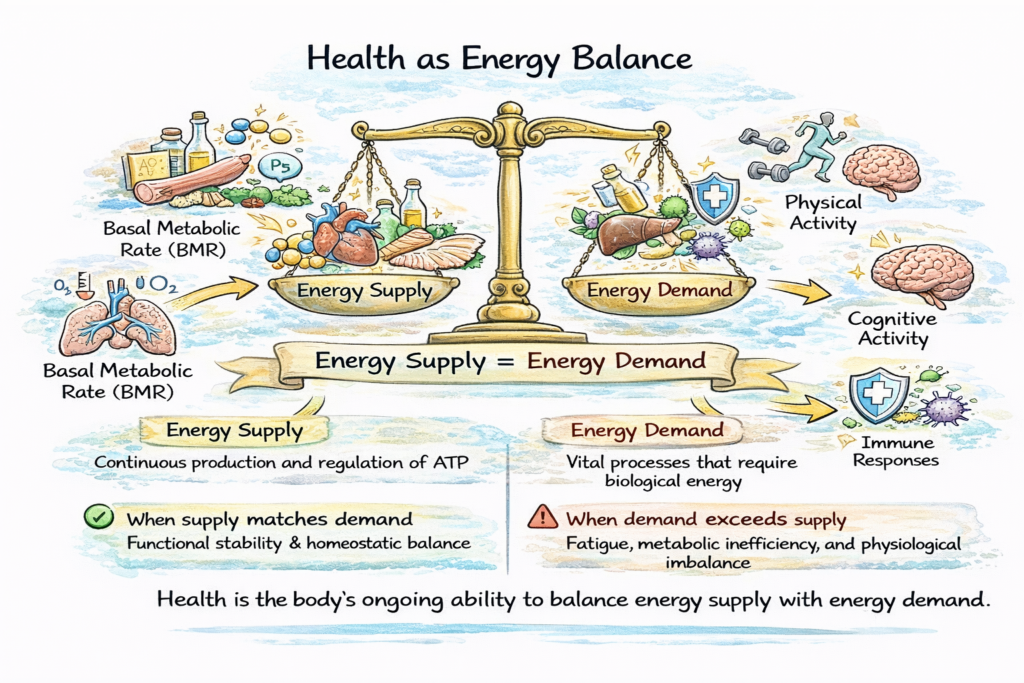
Health as Energy Balance Health depends on the continuous production, distribution, and regulation of energy within the body. To maintain
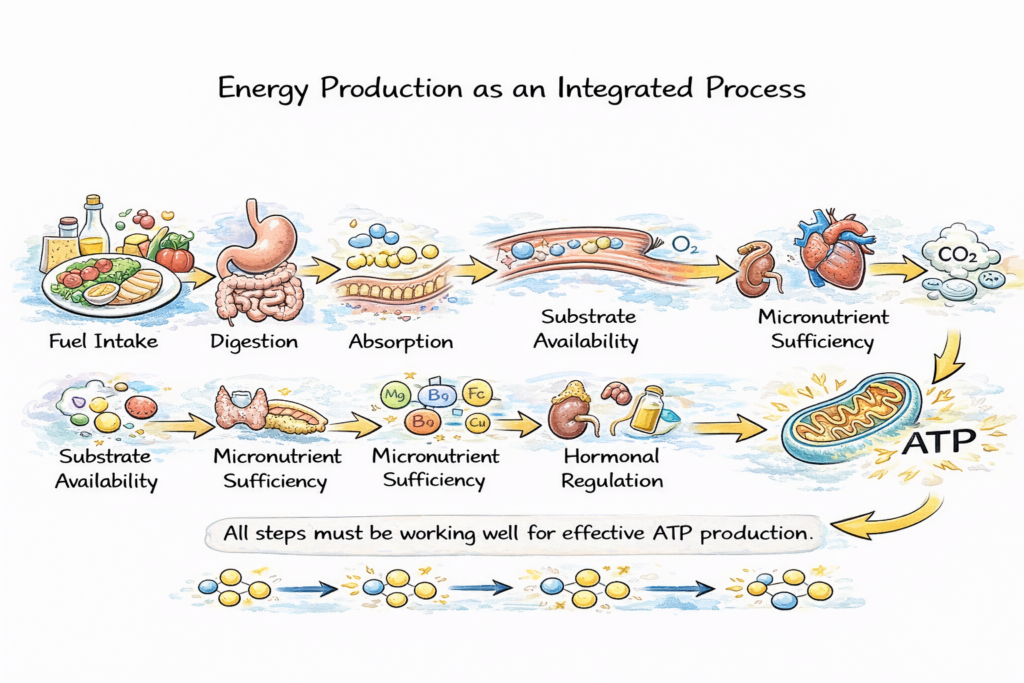
Energy Production as an Integrated Process For ATP (the body’s usable energy currency) to be generated efficiently, several coordinated steps
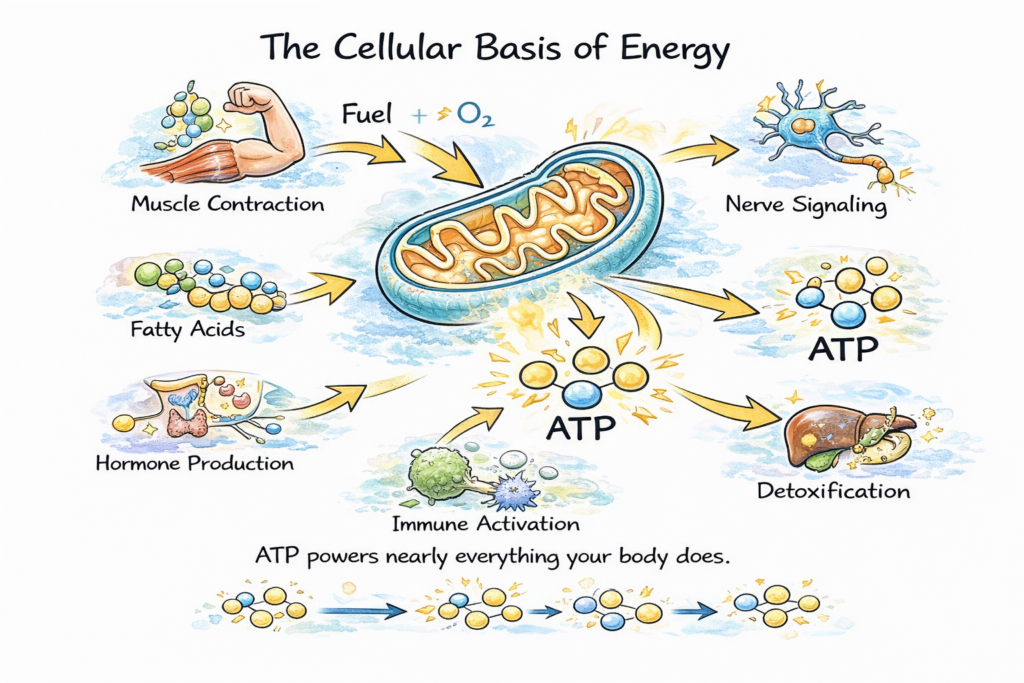
The Cellular Basis of Energy At the center of all physiological activity is the cell — the fundamental unit of